Campus Facts at a Glance
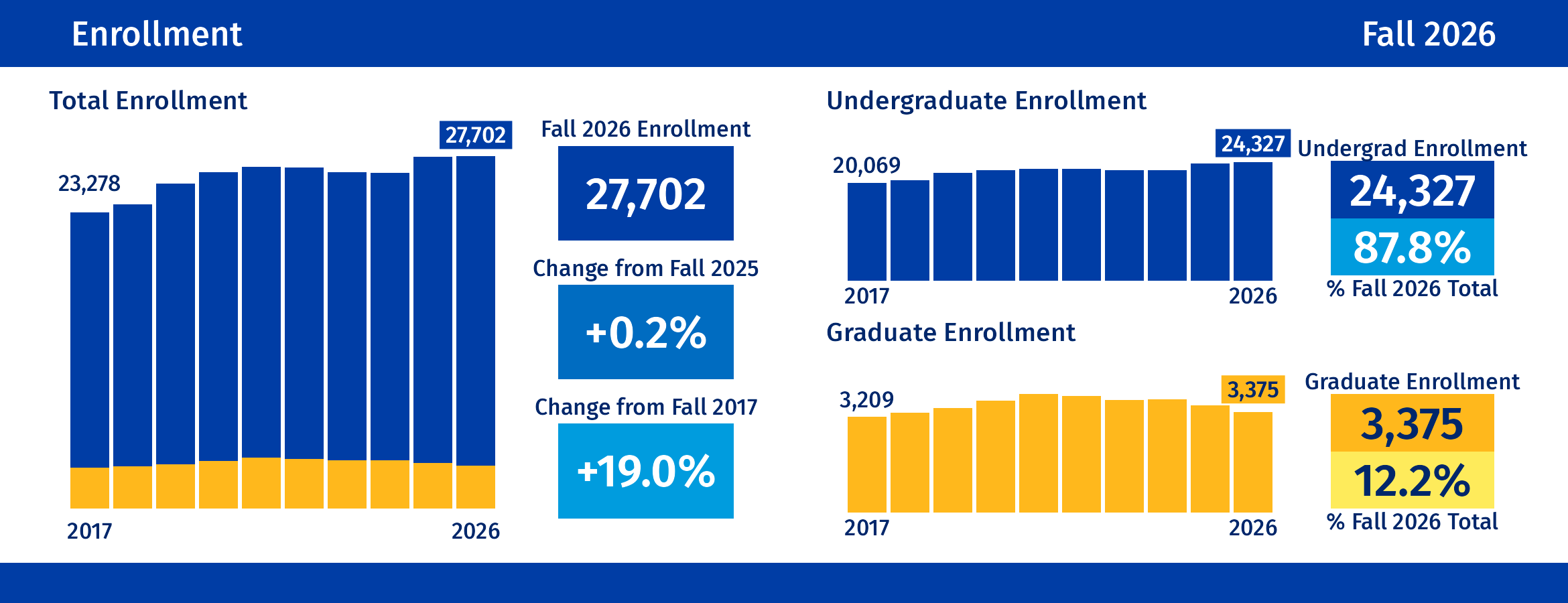
Click here for a text representation of the above graphic. For additional details, visit the UCR Enrollment dashboard.
Counts represent distinct students who are enrolled in credit-bearing classes as of the fall third-week census.
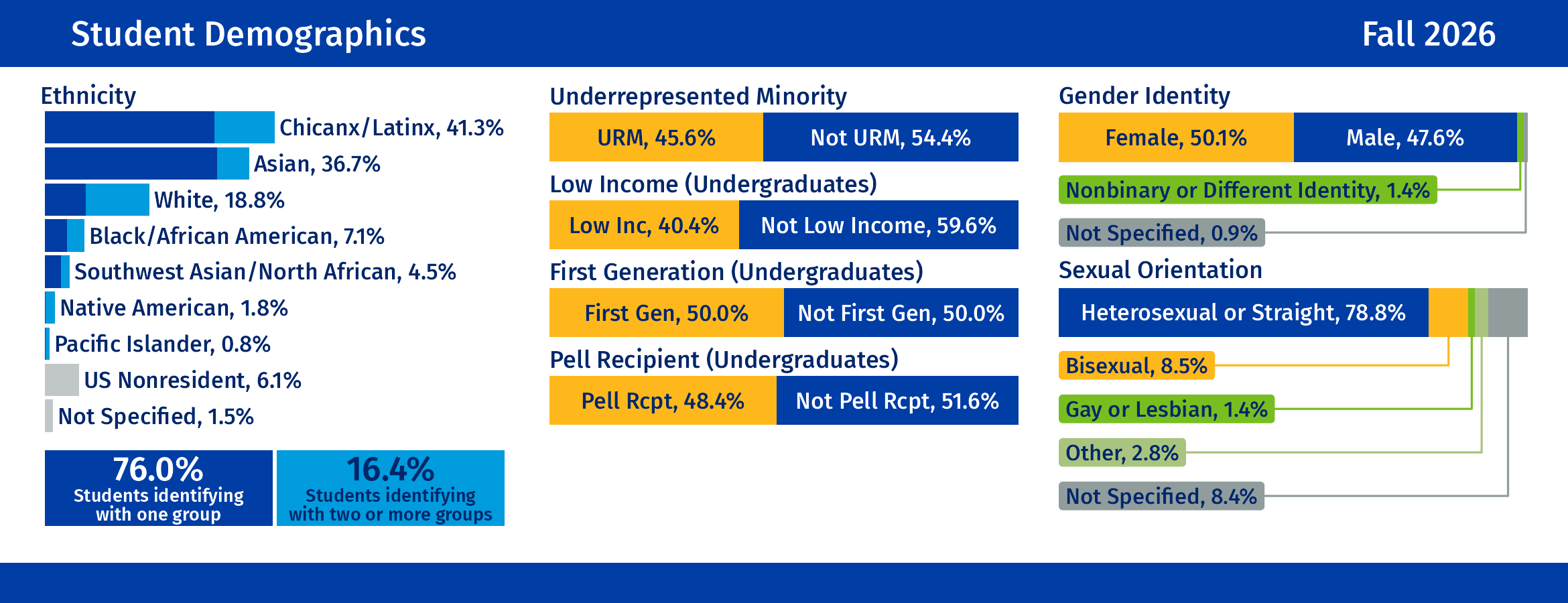
Click here for a text representation of the above graphic. For additional details, visit the UCR Enrollment Demographics dashboard.
- Percentages represent the proportion of distinct students who are enrolled in credit-bearing classes as of the fall third-week census. Medical residents are not included.
- Aggregated ethnicity categories are based on students' self-reported identifications on the admission application. Students may select identifications corresponding to multiple categories. Domestic students are counted in each applicable category; consequently, individual category percentages will sum to more than 100%. Nonresident international students are counted only in the US Nonresident category.
- Underrepresented minority (URM) students include those who identify as Native American, Black/African American, Chicanx/Latinx, or Pacific Islander.
- Figures for low income and first generation status are based, respectively, on students' family income and parental education levels, as self-reported at application time.
- Students are defined as Pell recipients when they receive the need-based federal Pell grant for their entering term; Pell recipient status reported for the most recent year is provisional.
- Low income, first generation, and Pell measures include undergraduate students only.
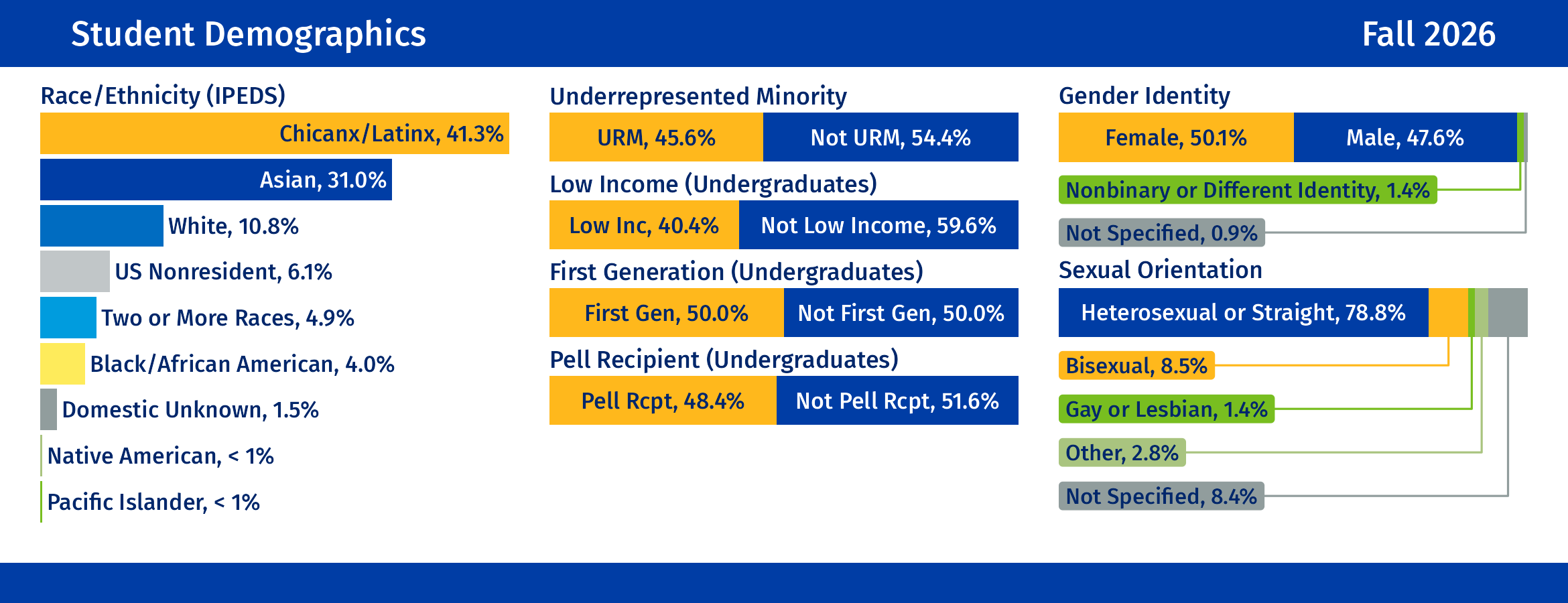
Click here for a text representation of the above graphic. For additional details, visit the UCR Enrollment Demographics dashboard.
- Percentages represent the proportion of distinct students who are enrolled in credit-bearing classes as of the fall third-week census. Medical residents are not included.
- Aggregated race/ethnicity categories follow federal IPEDS definitions for race/ethnicity, using students' self-reported identifications on the admission application. Note that under the IPEDS definitions, students are counted in one category only.
- Underrepresented minority (URM) students include those who identify as Native American, Black/African American, Chicanx/Latinx, or Pacific Islander.
- Figures for low income and first generation status are based, respectively, on students' family income and parental education levels, as self-reported at application time.
- Students are defined as Pell recipients when they receive the need-based federal Pell grant for their entering term; Pell recipient status reported for the most recent year is provisional.
- Low income, first generation, and Pell measures include undergraduate students only.
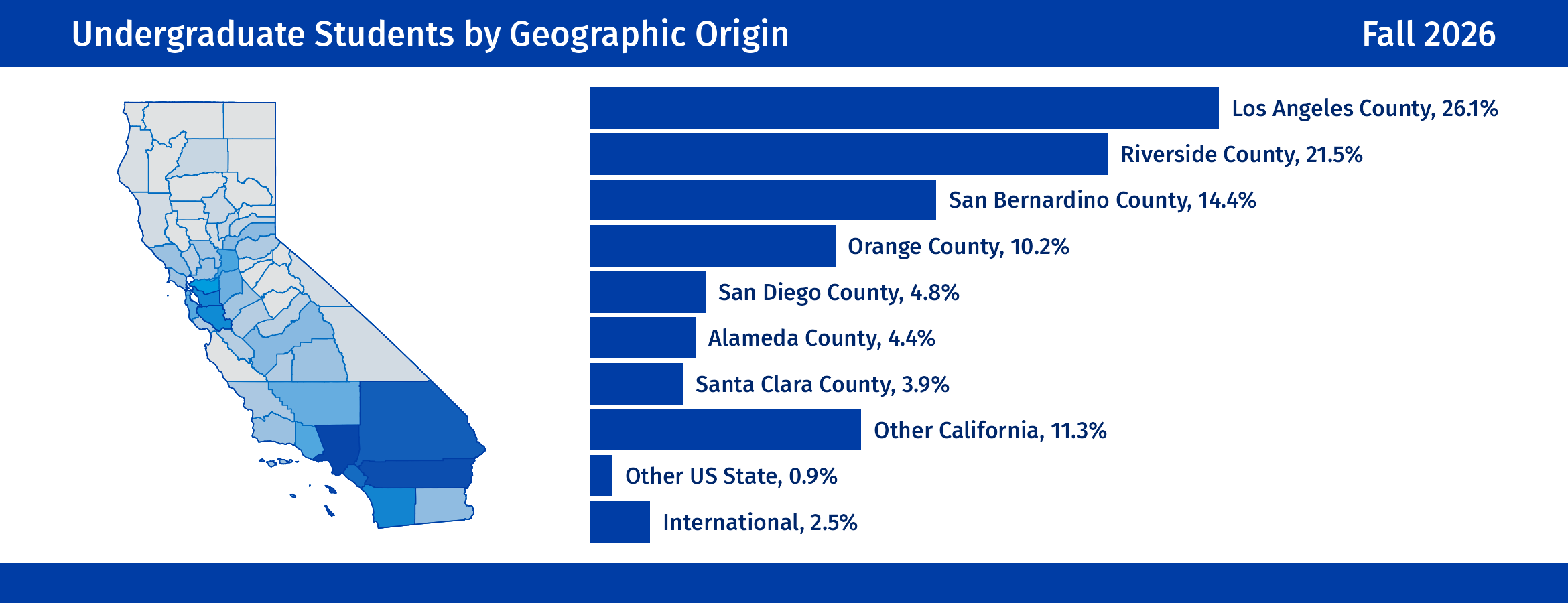
Click here for a text representation of the above graphic. For additional details, visit the UCR Enrollment Demographics dashboard.
Percentages represent the proportion of distinct undergraduate students who are enrolled in credit-bearing classes as of the fall third-week census. Geographic origin is based on students' address of permanent residence at application time.
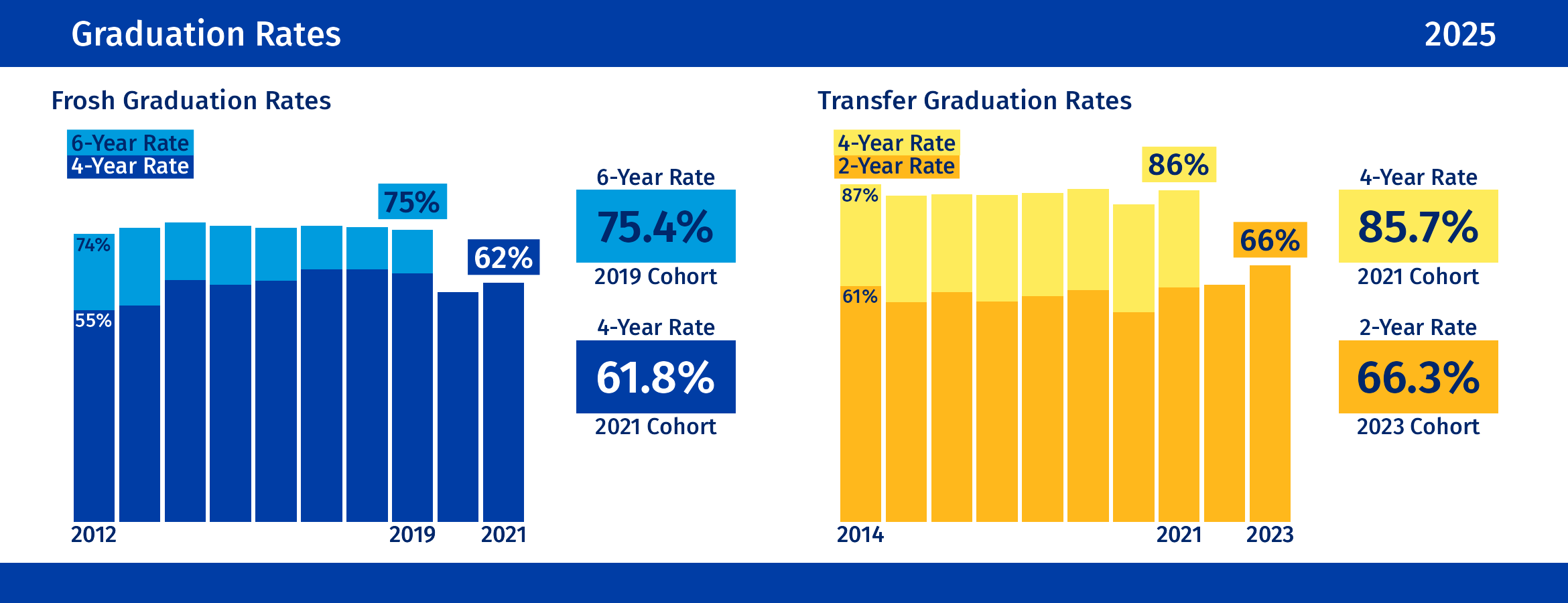
Click here for a text representation of the above graphic. For additional details, visit the UCR First-Time Full-Time Frosh Graduation Rates dashboard and the UCR Transfer Retention and Graduation Rates dashboard.
Percentages represent the share of the cohort starting in the indicated fall term that graduated within the specified time. Graduation rates are cumulative and are measured through the final summer of the corresponding year.
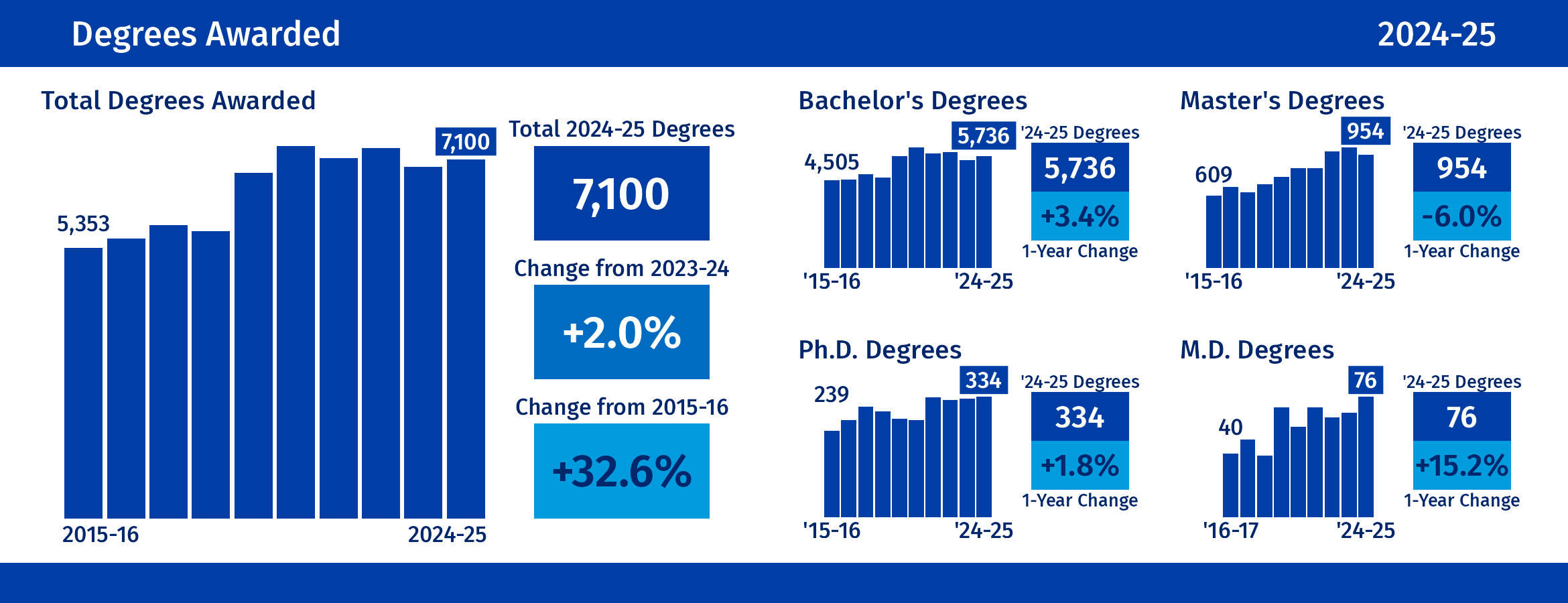
Click here for a text representation of the above graphic. For additional details, visit the UCR Degrees Awarded dashboard.
Counts represent degrees earned between summer and spring of the years indicated (i.e., leading summer). For students earning multiple degrees within a single measurement period (e.g., double majors), each degree awarded is included in the count.
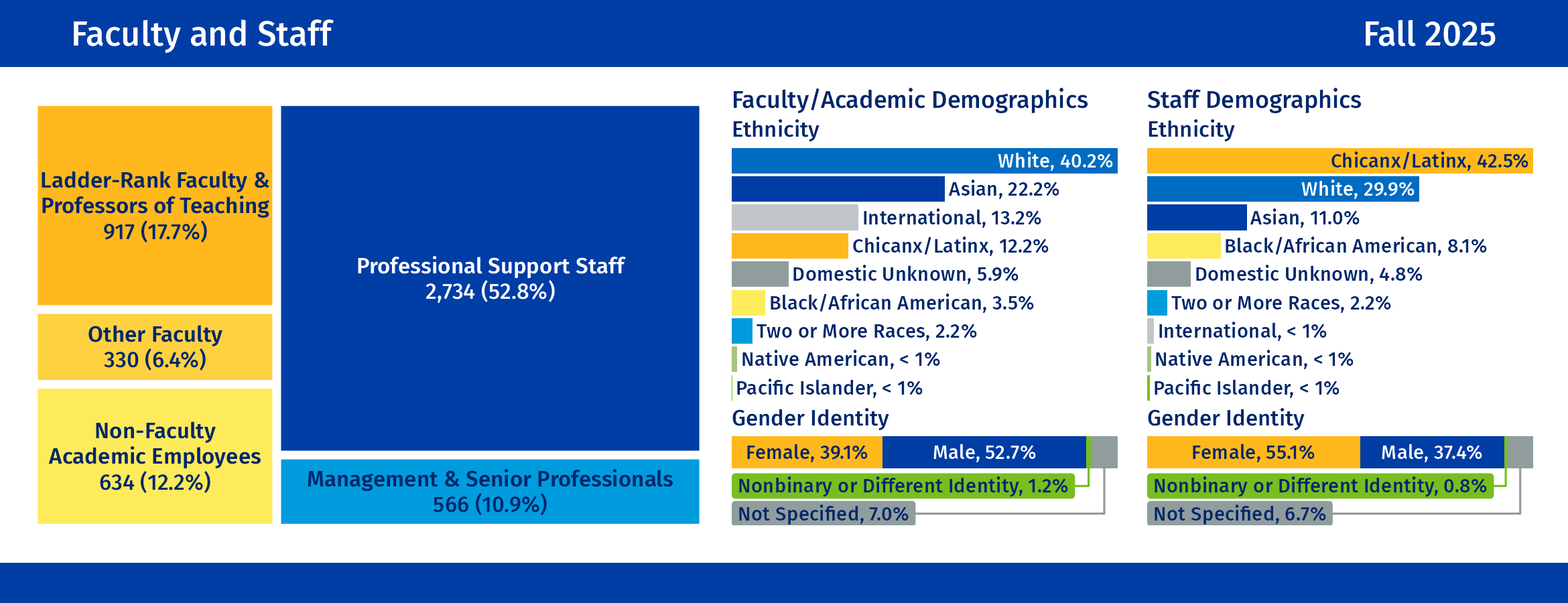
Click here for a text representation of the above graphic. For additional details, visit the UCR Faculty and Staff Statistics dashboard.
Counts represent unduplicated headcounts for UCR employees as of the October payroll. Employees holding multiple positions are counted under what IR considers their primary job title. Counts exclude student employees. Medical residents are counted as non-faculty academic employees.
About Us
- Institutional Research supports UC Riverside with modeling, analysis, and reports to inform campus decision-making. We are the source of many official UCR statistics related to students, faculty, and staff. Please visit our Campus Statistics page for interactive dashboards and data downloads, or contact us at ir@ucr.edu if you have a request or question not covered by our web tools.
New Features
- The Academic Data Dashboards are now available. Access is available to authorized users only. For inquires, contact ir@ucr.edu.
- If you're looking for internal documents such as the IR deans' dashboards, you can find them in our Internal Report Sharing folder.
- Looking for specific information on enrollments, degrees awarded, or graduation rates at UCR? Explore the data using SmartQuery, an interactive data tool that produces customized tables and plots based on your search terms.